

Overview
For many new mothers, postpartum hair loss is a common and frequently unanticipated experience. Although having a new baby is a joyous time in life, there are many hormonal and physical changes that come with it. Hair loss is one of the most upsetting of these. Postpartum telogen effluvium is the medical term for this transient ailment that many women experience after giving delivery. Reducing stress and enhancing recuperation during the postpartum phase can be achieved by knowing why this occurs and how to handle it.
What Leads to Hair Loss After Giving Birth?
High quantities of estrogen during pregnancy extend the hair cycle’s growth phase. Hair becomes thicker and more voluminous as a result. Hormone levels, particularly estrogen, rapidly decline after delivery. Increased hair shedding usually occurs two to four months after childbirth as a result of this abrupt hormonal change that forces many hair follicles into the resting (telogen) phase.
Although this kind of hair loss may appear concerning, it is quite normal and only lasts temporarily. Within six to nine months of giving birth, the majority of women start to feel better, and their natural hair growth returns without the need for medical intervention.
Important Aspects of Postpartum Hair Loss Timing:
Hair loss typically begins two to four months after giving birth and peaks around the fourth month.
Volume: Although the rate of hair loss varies, it is typical to lose over 100 hairs every day. Hair clumps may be seen on your pillow, in your shower drain, or in your brush.
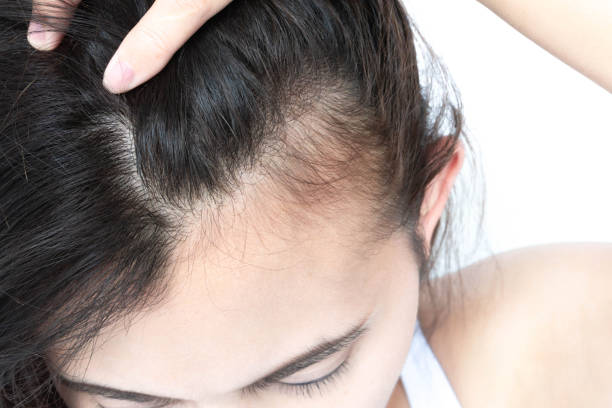
Location: The hairline and temples are where hair thinning is most evident, and in certain situations, it gives the appearance of receding hair.
Duration: As hormone levels settle, this kind of hair loss usually goes away on its own in six to twelve months.
Non-Permanent: Hair loss during childbirth is temporary. Over time, you’ll notice a noticeable return to your hair’s typical growth cycle.
How to Handle Hair Loss After Giving Birth
Consume a well-rounded diet: Hair health is supported by nutrients like iron, zinc, vitamin D, and biotin. Include lean meats, eggs, leafy greens, and almonds in your meals.
Be Kind to Your Hair: Steer clear of harsh chemical treatments, tight ponytails, and frequent brushing. To reduce breakage, use a comb with a wide tooth.
Steer clear of heat styling tools: To lessen hair stress, use blow dryers, curling irons, and straighteners sparingly.
Remain Hydrated and Rested: Adequate rest and hydration can promote healthy hair and help with general recuperation.
See a Doctor if Necessary: To rule out additional factors like thyroid issues or nutritional deficiencies, consult a healthcare professional if hair loss lasts more than a year or seems extreme.
When to Get Medical Advice
Even while postpartum hair loss is usually benign, severe or ongoing hair thinning may be a sign of an underlying illness. Hair loss can also result from conditions like alopecia areata, hypothyroidism, or anemia. A dermatologist or other medical specialist can assist in diagnosing and efficiently treating hair loss if you’re not sure if it’s normal or requires medical attention.
In conclusion
Although disturbing, postpartum hair loss is a common aspect of many women’s postpartum recuperation. Simple actions to take care of your body and hair, along with an understanding of the causes, can have a significant impact. Hair typically recovers to its pre-pregnancy state with patience, time, and the right treatment. Keep in mind that this is a common occurrence for millions of women, and it’s simply another indication of the amazing work your body has done.