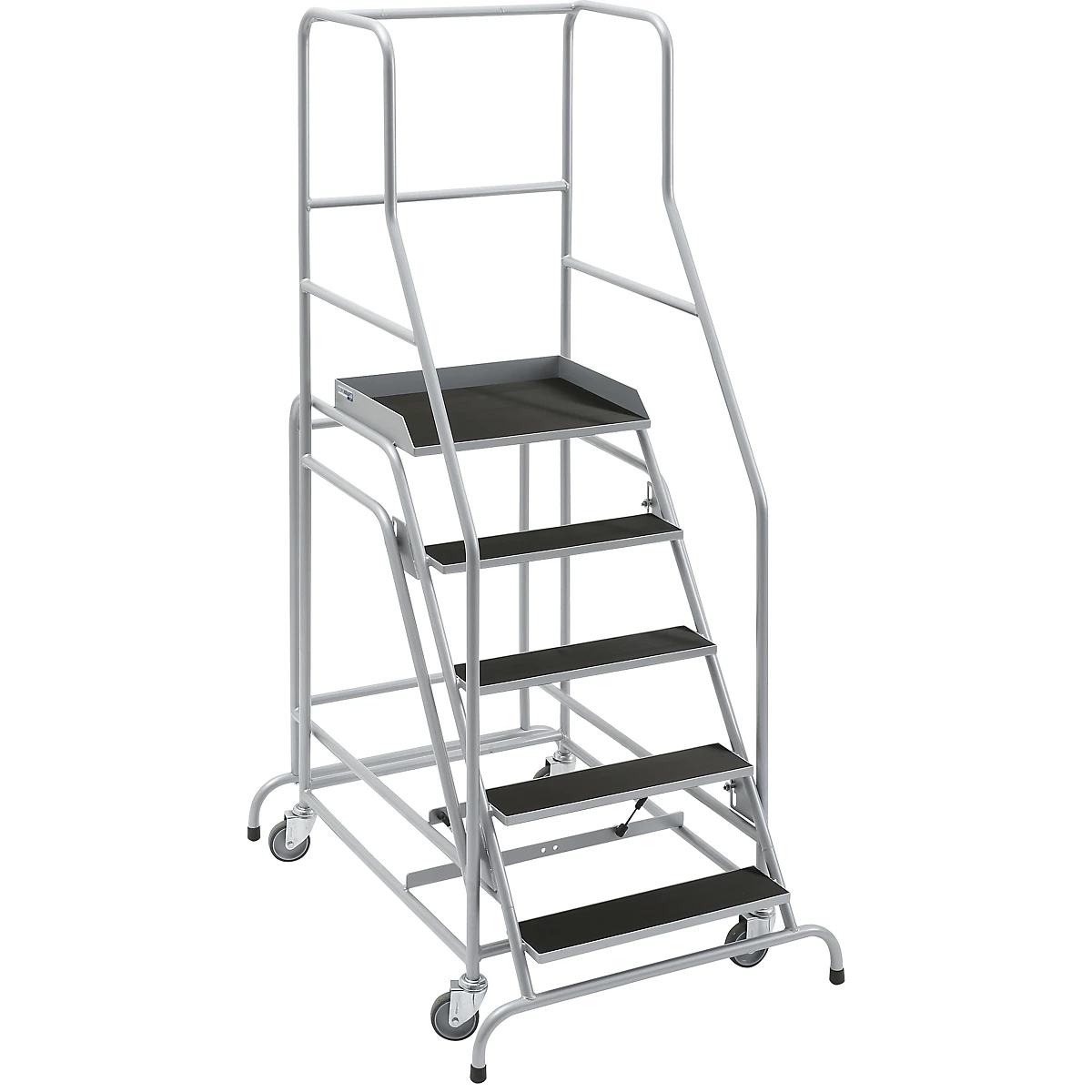


Elevated spaces in warehouses are critical areas where safe and efficient access to these areas is vital to productive warehouse operation. With numerous forklifts, conveyor belts and storage racks, one piece is known for its simplicity, versatility and reliability: the Platform ladder. A few other remarkable features of Platform ladders as compared to ordinary step stools or rolling ladders are, they provide a firm wide working surface at height to accomplish your tasks effectively with a far lesser risk of slips, trips and falls and even strain injuries. An appropriate ladder sourced from an established manufacturer like equip2go, for example, combine strong construction and ergonomic design elements to allow your warehouse personnel to carry out a wide variety of tasks—be it managing stock, performing light maintenance or stock picking—safely and comfortably. This article covers the importance of Platform ladders for safe access to warehouses, elaborating on their benefits, design aspects, risk mitigation features, and best practices for implementation.
Safe Access to Warehouses Is A Big Deal
Warehouse settings are fluid, and often very busy which might have activity within the three dimensions of multiple racking systems. Workers often operate in narrow aisles, lift heavy products and check stock at different heights. These day-to-day processes become a dangerous undertaking without adequate access equipment. Falls at even minor elevations can cause serious injury, lost productivity and increased workers’ compensation claims. The fear of falling can lead to slowed work processes, creating inefficiencies and morale problems. These challenges can be tackled head-on by investing in a platform ladder. By offering a safe, even standing surface, along with handrails for support, a quality ladder changes what, at first glance, looks like a treacherous ascent into a controlled, low-stress task. This investment keeps employees safe while saving an organization from expensive downtime and potential lawsuits.
A Brief History On Warehouse Safety Equipment
Industrial warehouse staff essentially used glorified wooden stools or foldable step ladders for such tasks, providing little stability and zero fall protection. These basic tools became inadequate as inventory demands increased and facilities soared to greater heights. The industry responded with rolling ladders, which added wheels for mobility and often didn’t provide adequate guardrails and toe protection. With the introduction of new products, Platform ladders—access equipment with a wide standing surface, full length handrails, and deck gates—came to market. This evolution is a mark of increased appreciation for ergonomics, human factors engineering, and risk management. Industry leaders such as equip2go have tapped into materials science and design innovation to provide ladders that exceed regulatory standards, giving warehouse managers peace of mind and ensuring employees are working in a safer, more productive environment.
A Primer on Platform Ladders
This type of ladder offers the best of both worlds, having the mobility of a rolling ladder and the safety features that accompany scaffolding. At the center of its design is a wide platform, almost always backed by handrails on three sides at a height higher than standing. This layout provides a safe working environment where users can work with tools, pull down boxes, or inspect things without concern for their balance. Most equip2go models come equipped with toe boards running around the platform perimeter that can help prevent dropped tools or materials from causing injury to personnel working below. The ladder’s bottom is cross-braced and has non-slip feet for maximum stability, even on slightly uneven floors. Wheels or castors, typically lockable, allow for repositioning between aisles and work zones, enabling teams to deliver secure access to places it is needed. Appreciating these high-level products drives home why Platform ladders are an essential investment for warehouse safety.